Dog Dementia: Signs, Night Waking and How to Help
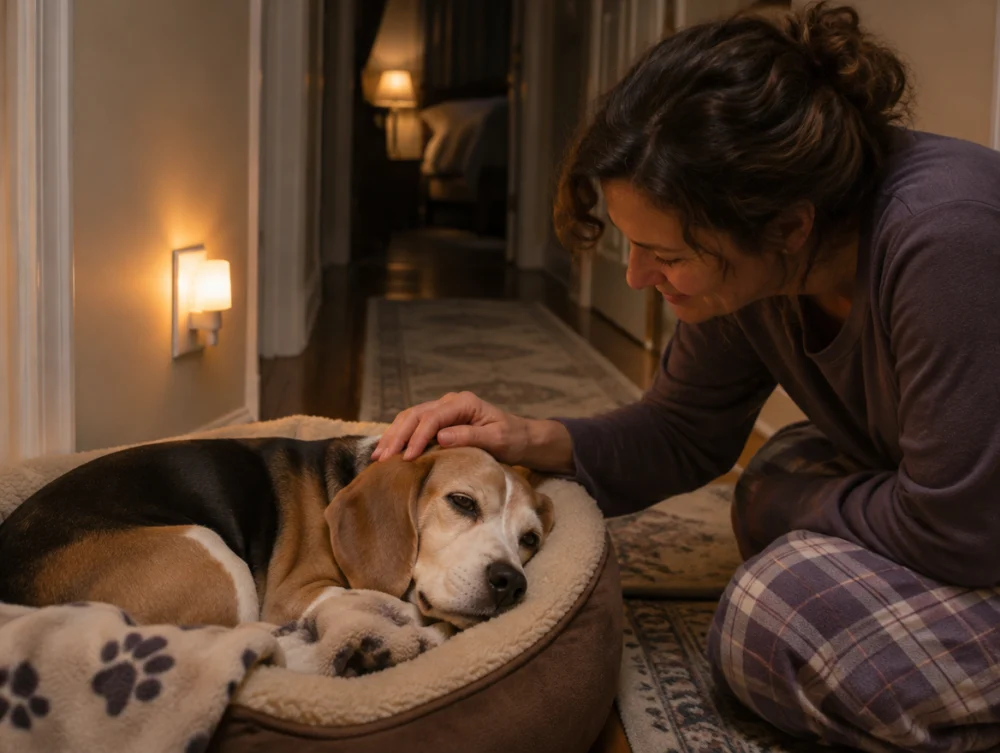
Dog dementia, also called canine cognitive dysfunction, is an age-related change in the brain. Common signs are night waking and pacing, getting lost in familiar places, staring at walls, new toilet accidents and less interest in family. Pain and other illnesses can look similar, so a vet check is the first step.
Older dogs naturally sleep more. But new restlessness at night, pacing, getting stuck in corners or forgetting familiar routines can be signs of pain or of dog dementia, known by vets as canine cognitive dysfunction. It is similar in some ways to dementia in people.
Signs of dog dementia
- Waking, wandering or barking at night
- Seeming lost in familiar places or staring at walls
- Walking in circles or getting stuck behind furniture
- Toilet accidents in a previously house-trained dog
- Less interest in greeting family or playing
- Responding differently to familiar cues
Why is my old dog restless at night?
Night restlessness in senior dogs can come from dementia, but also from pain, needing to urinate more often, anxiety or reduced sight and hearing. Keeping a short diary of what happens and when helps your vet find the cause.
How to help a dog with dementia
Book a vet check
Pain, sight loss and other illnesses can look like confusion. Your vet can also discuss treatments and diets that may help.
Keep a steady routine
Regular times for meals, walks and bed help older dogs feel secure.
Make nights easier
Use a soft night light, keep furniture in the same places and offer a short walk and toilet break late in the evening.
Keep their mind busy
Gentle sniffing games and short, easy training sessions give older dogs healthy mental exercise.
Frequently asked questions
Can dog dementia be treated?
There is no cure, but vets can suggest medicines, diets, supplements and routines that may slow changes and help your dog feel more settled.
Is it dementia or pain?
It can be hard to tell at home because pain often causes restlessness and grumpiness too. A vet exam helps tell them apart.
Get the free Senior Care Plan
A one-page printable checklist plus one short, useful email a week about caring for an older dog.