Cloudy Eyes in Dogs, Hearing Loss and Dental Pain: A Senior Dog Guide
Cloudy, blue-grey eyes in older dogs are often nuclear sclerosis, a normal age-related lens change that usually affects sight only a little. Cataracts look similar but can cause real vision loss. A vet can tell them apart; see one quickly if an eye is red, painful or suddenly changes.
Cloudy eyes in dogs: nuclear sclerosis or cataracts?
A blue-grey haze in both eyes is very common in older dogs. It is often nuclear sclerosis, a natural hardening of the lens with age. Cataracts can look similar but are denser and can affect sight. Only an eye exam can tell them apart, so mention any cloudiness at your dog’s next check-up.
See your vet quickly if an eye looks red, sore, swollen or suddenly different, or if your dog starts bumping into things.
Hearing loss in senior dogs
If your dog stops responding to their name or startles easily, they may not hear you. Approach from the front, use clear hand signals, and gently tap the floor so they feel you coming.
Dental pain in older dogs
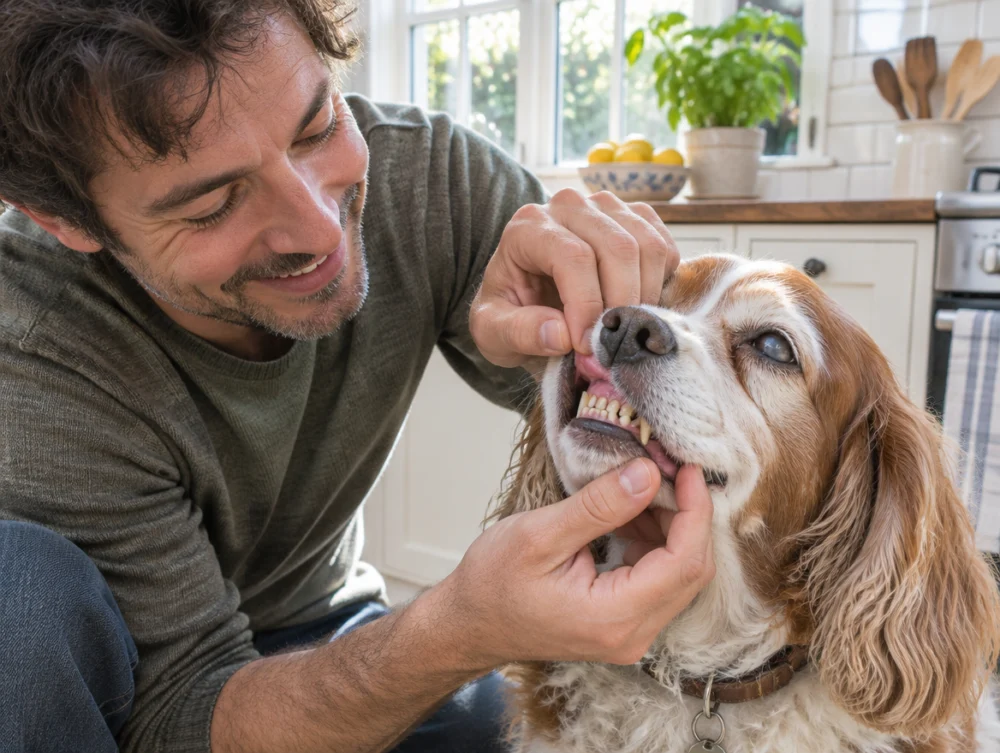
Dental disease is very common in older dogs and can be painful. Watch for bad breath, dropping food, chewing on one side or pawing at the mouth. Regular dental checks matter more with age.
Frequently asked questions
Can dogs see with cloudy eyes?
Often yes. With nuclear sclerosis most dogs keep useful vision. Cataracts can reduce sight, which is why an eye exam matters.
Why does my old dog have bad breath?
Bad breath in older dogs is often a sign of dental disease, which can be painful. Ask your vet to check your dog’s teeth.
Get the free Senior Care Plan
A one-page printable checklist plus one short, useful email a week about caring for an older dog.