What to Feed an Old Dog (and What to Do When They Won’t Eat)
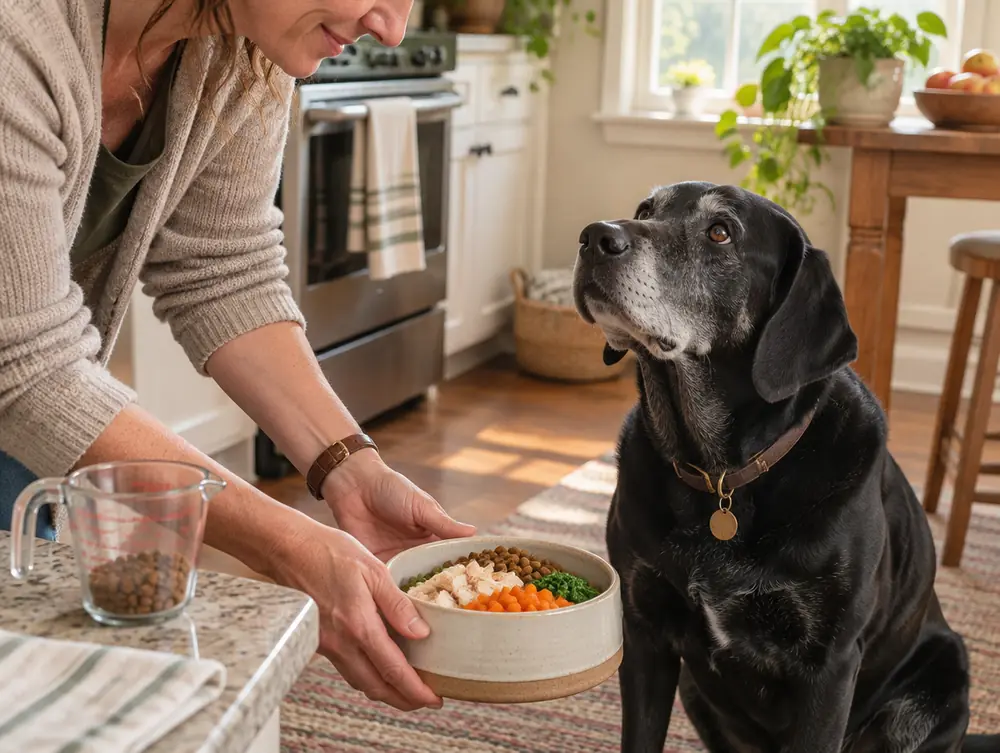
Most older dogs do best on a complete, balanced diet in measured portions that keep them lean, because many burn fewer calories as they slow down. If your old dog stops eating, loses weight or suddenly drinks much more, speak to your vet promptly, as these can be early signs of illness or dental pain.
Many dogs become less active as they age, so they often need fewer calories than they did as young adults. Others, especially very old dogs, start to lose weight and muscle. The right amount depends on your individual dog.
Start with your dog’s body shape
You should be able to feel the ribs easily without pressing hard, and see a waist when you look down from above. If you cannot, your dog may be carrying extra weight. If the hips and spine feel sharp, your dog may be too thin. Ask your vet to show you how to body condition score at your next visit.
Simple feeding habits for senior dogs
- Measure every meal with a scale or measuring cup instead of guessing
- Weigh your dog once a month and write it down
- Count treats as part of the daily food; a common guideline is to keep treats to about 10% of daily calories
- Use part of each day’s food as training rewards
Should I switch to senior dog food?
Not every older dog needs a “senior” formula, and these foods vary a lot. Talk to your vet before switching, especially if your dog has a health condition, and change foods gradually over about a week.
Old dog not eating or losing weight? When to worry
A change in appetite can come from dental pain, nausea, illness or stress. Contact your vet promptly if your dog refuses food for more than a day, loses weight without trying, or starts drinking or urinating much more than usual.
Frequently asked questions
How often should I feed an old dog?
Most senior dogs do well on two measured meals a day. Some very old or small dogs prefer smaller, more frequent meals. Ask your vet if you are unsure.
Why is my old dog losing weight?
Weight loss in older dogs can be caused by dental pain, muscle loss or illness. Because the causes vary, it is worth a vet check.
Get the free Senior Care Plan
A one-page printable checklist plus one short, useful email a week about caring for an older dog.